May 01, 2020 | By KJLC Blog
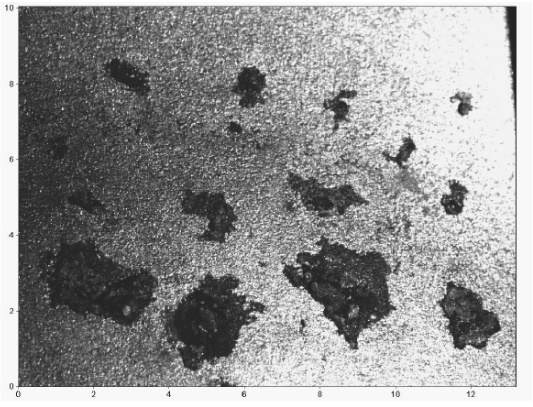
In a recently issued patent (US 10,619,950 April 14, 2020) researchers at the Toyota Motor Company have demonstrated that the corrosion resistance of stainless steel exhaust systems for cars and trucks can be substantially improved by heat treatment in high vacuum. Stainless steel is a complex metal alloy of iron, nickel, chrome and other elements. It is known to be a very durable metal but even this robust material can be corroded by exposure to chloride ions, sulfuric and hydrochloric acids, soot and other artifacts of the exhaust from an internal combustion engine. Reaction with these aggressive gases causes pits in steel which eventually lead to premature failure. The use of low-grade fuels speeds the degradation of exhaust systems.
Read More
Tags:
INNOVATE
Systems
Vacuum Science
Deposition Techniques
April 21, 2020 | By KJLC Blog

As a Product Manager in the Materials Division, I field a lot of questions from customers from many different industries with varying degrees of sputtering experience. One of the more common emails that I receive goes something along the lines of, "There's something wrong with my bonding because the indium has melted out of the sides of my target." Often times the user has waited for their target, spent money on it, only to use it one time and had to stop due to the melted bond. A frustrating situation for sure.
Read More
Tags:
Vacuum Science
Deposition Materials
Deposition Techniques
March 18, 2020 | By KJLC Blog
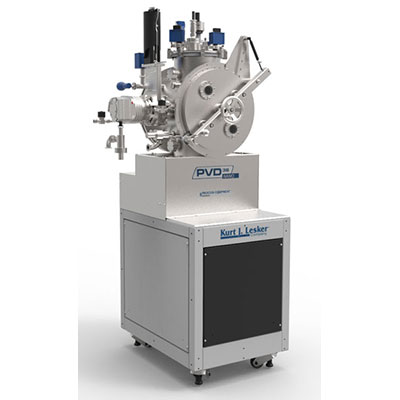
In these uncertain times, with many people needing to leave their labs for an extended period, it makes sense to review basic shut down procedures for thin film deposition systems. A comprehensive approach to system shutdown may reduce the number of issues related to the eventual re-start. At the Lesker Company we have a team of highly skilled engineers available to assist.
Read More
Tags:
Systems
Vacuum Science
March 06, 2020 | By KJLC Innovate
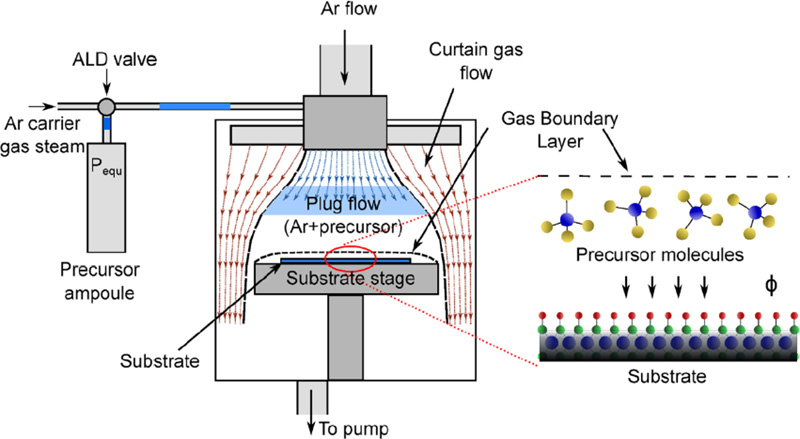
Dr. Nicholas A. Strnad (General Technical Services, LLC) in collaboration with the U.S. Army Combat Capabilities Command Army Research Laboratory and the University of Maryland, College Park have recently developed conformal processes for a variety of lead-based electronic materials with outstanding properties using atomic layer deposition (ALD)...
Read More
Tags:
INNOVATE
Systems
Vacuum Science
Deposition Techniques
July 22, 2019 | By KJLC Innovate

Sputtering is a relatively mature approach for the deposition of a variety of thin film materials. Initial publications on the process date to the early 1800s. In its simplest form sputtering provides a route to manufacture high quality reflective coatings for mirrors and potato chip bags; and at the extreme end, for creating the most advanced semiconductor computing devices in the world.
Read More
Tags:
INNOVATE
Systems
Vacuum Science
Deposition Techniques
March 15, 2019 | By KJLC Innovate
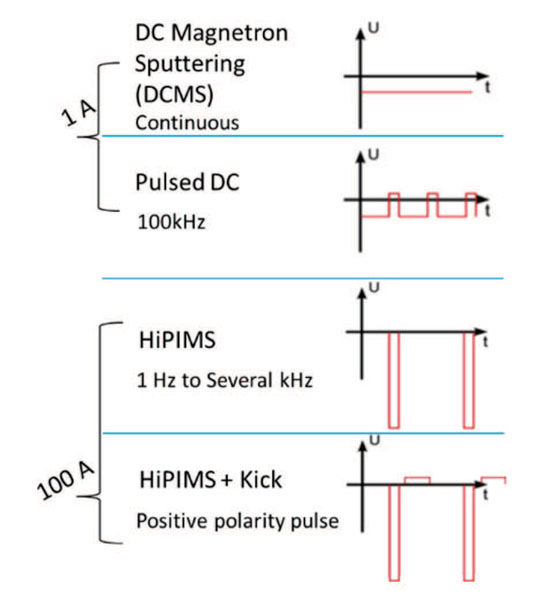
High impulse power magnetron sputtering, either HIPIMS or HiPMS, was first reported in 1999 by Dr. Vladimir Kouznetsov, et al. from Linköping University’s Department of Physics. HIPIMS is distinct from classical direct current magnetron sputtering, or dcMS, because it utilizes a rapid series of pulses at very high voltage, on the order of 2000V, and high current density approaching 10A/cm2. In addition, HIPIMS also exhibits some degree of self-sputtering, where sputter target adatoms are ionized with some recycling of process gas and ionized target material to the surface of the target.
Read More
Tags:
INNOVATE
Vacuum Science
May 09, 2018 | By KJLC Innovate
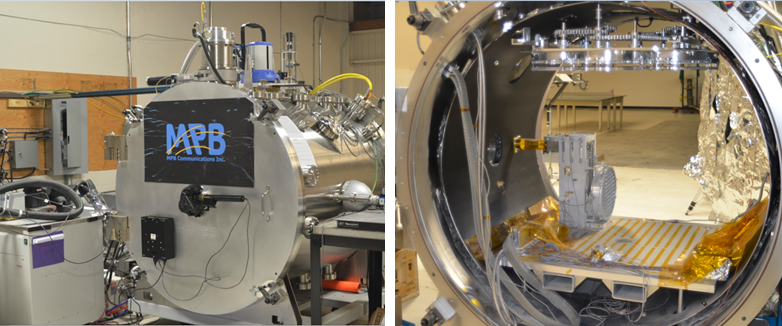
The current push to commercialize space travel has resulted in renewed demand to launch objects and even people into earth orbit or event deep space. Companies including SpaceX, Blue Origin and Rocket Lab have demonstrated the ability to make certain portions of a launch vehicle reusable and that may dramatically alter the cost to get to space. True rocket ship factories are emerging which, in one case, can put out a couple of full blown launch vehicles every month!
Read More
Tags:
INNOVATE
Systems
Vacuum Science
Deposition Techniques
April 11, 2018 | By KJLC Innovate

Researchers Dr. André Anders and Dr. Yuchen Yang have expanded on their previous imaging work on linear magnetron cathodes. In their most recent work, titled “Plasma studies of a linear magnetron operating in the range from DC to HIPIMS,” the authors put forth additional information on the evolution and movement of spokes with several deposition materials and discharge conditions.
Read More
Tags:
INNOVATE
Vacuum Science
November 28, 2017 | By KJLC Innovate
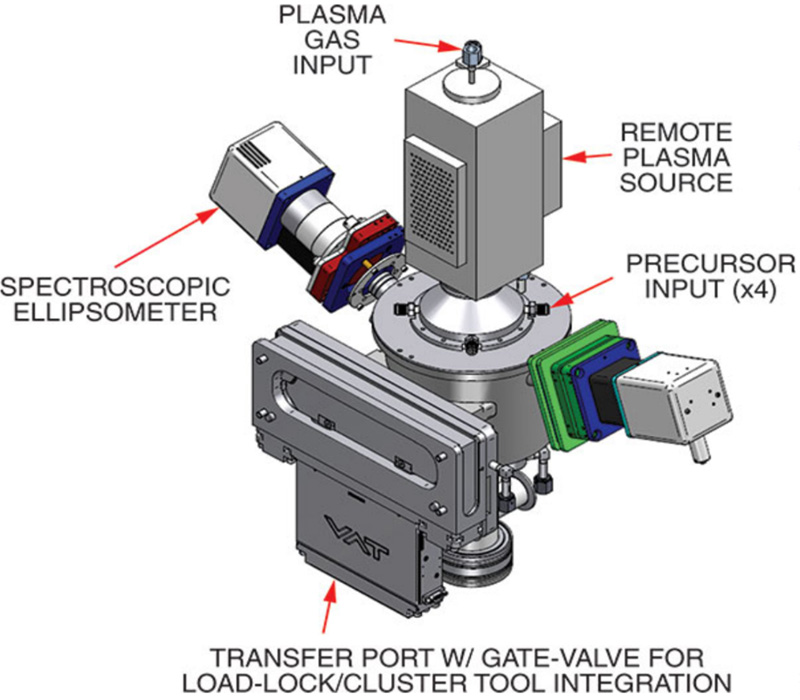
The Kurt J. Lesker Company® (KJLC®), a global manufacturer of vacuum systems, thin film deposition tools and vacuum components, today announced that the United States Patent and Trademark Office has issued US patent number 9,695,510, 'Atomic Layer Deposition Apparatus and Process', covering the design of an atomic layer deposition system and the process to use that system to deposit highly precise and conformal thin films. This proprietary technology substantially reduces the interaction of various precursor gas molecules with the internal surfaces of the reaction chamber and enables actual focusing of gas streams to more effectively coat the surface of arbitrarily large substrates.
Read More
Tags:
INNOVATE
Systems
Vacuum Science
Deposition Techniques
November 28, 2017 | By KJLC Blog
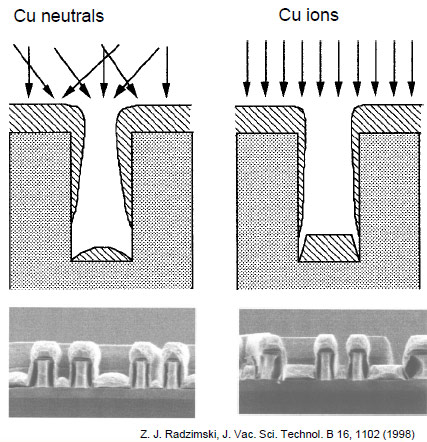
On 6 November 2017 our Jason Hrebik and J.R. Gaines delivered presentations at the 70th annual conference on Gaseous Electronics (GEC2017), held at the Doubletree Hotel, Green Tree, PA. Hrebik displayed his expertise through a presentation on the capabilities and benefits of the High Power Impulse Sputtering (HiPIMs) process and provided the audience with an introduction to the new KJLC Impulse™ power supply. The conference featured a group of presentations from industrial companies, including LAM Research, Applied Materials, and Tokyo Electron. Gaines capped off the afternoon session with a review of the practical issues associated with the integration and application of plasmas in Plasma-Enhanced Atomic Layer Deposition (PEALD).
Read More
Tags:
Vacuum Science
Deposition Techniques
Previous Entries
Next Entries